
Mahjong Match
Topy GamesBoard
4.9438.00 Reviews
- Version
- 1.1.1.20260623
- Installs
- 1.00M
- Age Rating
- Everyone
Screenshots

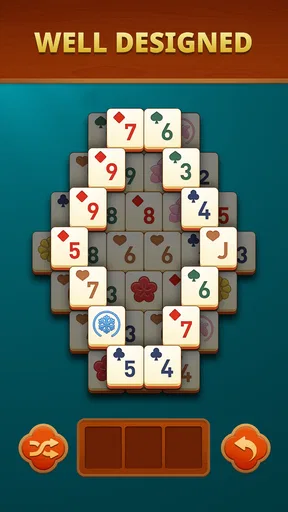
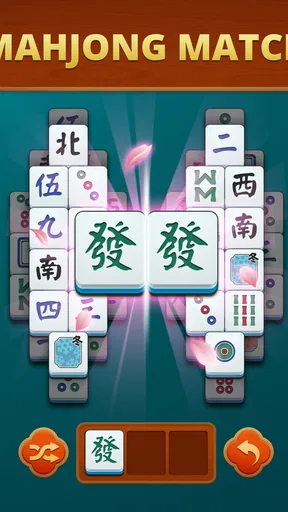
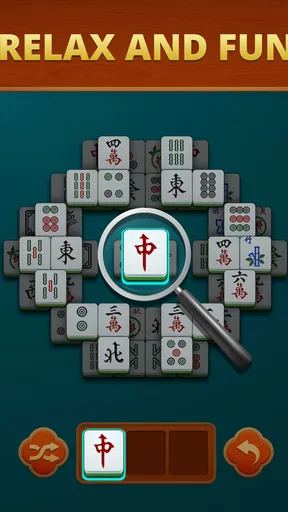
Our Review of Mahjong Match
 Analysis by Appyee
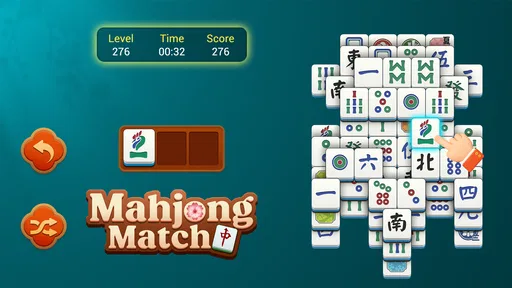
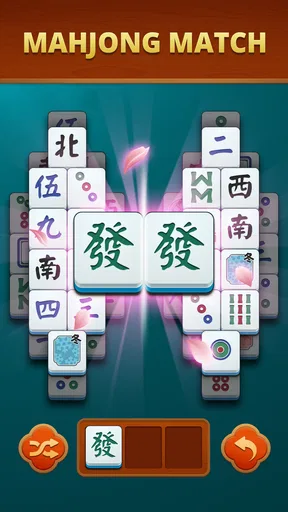
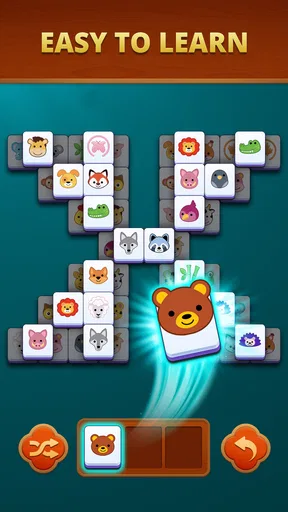
I approached Mahjong Match as a quiet, accessible board game rather than a fast arcade challenge. Its central idea is familiar: remove matching mahjong tiles from a layered arrangement until the board is clear. What makes this particular release interesting is its focus on large tiles and straightforward play. That choice has a real effect: I spend less time fighting the interface and more time looking for the next legal pair.
Developed by Topy Games, it is free to play and suitable for Everyone. The game arrived on April 29, 2025, and its current version is 1.1.1.20260623. It runs on Android 7.0 or later, which makes it usable on many older phones and tablets. The store presents it as a classic tile-matching puzzle, but in everyday use I found its strongest quality to be its readability. The large-tile approach is not just cosmetic; it changes who can comfortably play.
Why large tiles matter more than they first appear
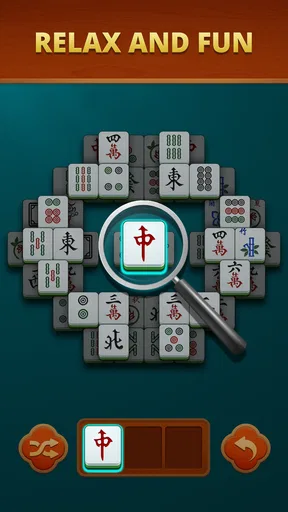
Many mahjong solitaire games look simple in screenshots, yet the small symbols can become tiring during a longer session. Here, the larger presentation makes the board easier to scan. I can identify a pair without leaning toward the screen, and I am less likely to confuse neighboring designs when the layout becomes busy.
That matters especially for older players, people using a smaller phone, or anyone whose eyesight is not perfect. It also helps when the game is played in a bright room, on public transport, or during a short break when I do not want to concentrate on tiny visual details. The experience feels calmer because the board communicates its information clearly.
The capability is still more than simple accessibility. Large tiles make the game a better fit for deliberate play. I can pause mentally, inspect the available choices, and decide whether removing one pair will expose a useful tile underneath. The board becomes a visual planning exercise instead of a test of how quickly I can recognize miniature symbols.
That said, clear tiles do not remove the puzzle element. A visible pair is not always the best pair to take. In a layered arrangement, one move may uncover a tile while another move keeps several options open. I found myself learning to look beyond the first matching pair, particularly when the board started to narrow.
Reading the board without rushing
My most useful habit was to scan in three passes. First, I looked for pairs that were immediately available. Next, I checked which tiles appeared to be blocking other tiles. Finally, I considered whether removing a pair would leave the remaining layout more open or more constrained.
This method is simple, but the large presentation makes it practical. On a cramped board, I would probably choose whatever pair caught my eye. With Mahjong Match, I can take a few seconds to compare alternatives. That small pause is where the game becomes a puzzle rather than a repetitive tapping exercise.
I also recommend avoiding automatic moves based only on matching symbols. If two pairs are available, I first consider the pair that releases a covered tile or reduces a crowded section. This is a useful approach for new players because it teaches the structure of mahjong solitaire without requiring a complicated tutorial or a separate strategy guide.
For someone playing with a family member, the same clarity creates an easy shared activity. One person can hold the phone while the other suggests a move, or both can discuss which pair seems safer. It is not a competitive board game in the traditional sense, but it works well as a cooperative visual puzzle.
What a normal session feels like
A typical session fits naturally into a short break. I can open the game, study the arrangement, and make a few careful matches without needing to remember a complicated control scheme. The basic interaction stays close to the physical idea of removing matching tiles from a table, so the learning curve is gentle.
This makes it suitable for players who do not usually play mobile games. Someone who finds action games stressful can understand the objective almost immediately. The game also works for a person who wants a screen activity that does not demand constant sound, rapid reactions, or a long uninterrupted commitment.
There is a trade-off in that simplicity. Players who expect a large campaign, character progression, or a deep collection system may find the experience restrained. Mahjong Match is built around the board itself. Its appeal depends on whether you enjoy examining patterns and making small decisions, not on unlocking a long list of extra systems.
I would also not describe it as a replacement for a traditional multiplayer mahjong game. The familiar tile shapes may suggest that kind of experience, but this is a solo matching puzzle. If you want betting rules, four-player turns, or the strategic complexity of full mahjong, you should choose a dedicated traditional mahjong app instead.
A realistic everyday use case
Imagine a parent or grandparent waiting at a clinic, sitting in the living room after lunch, or taking a quiet break in the afternoon. A large, readable board is easier to manage than a visually dense game with tiny controls. The player can focus on one decision at a time and stop when the moment is over.
That scenario is where I think the game makes the most sense. It offers a gentle mental activity without asking the player to learn a complicated ruleset. The Everyone age rating also makes it a reasonable family-friendly choice, although the best fit still depends on whether the individual enjoys matching puzzles.
It can work for younger players too, particularly those practicing visual recognition and patience. I would still stay nearby with a very young child, not because the game is difficult to understand, but because the value comes from thinking about choices rather than tapping every matching tile immediately.
For older adults, I would start with a larger phone or tablet if one is available. The game’s large tiles already help, but a physically bigger screen can make the whole arrangement easier to inspect. I would also encourage the player to use a relaxed pace. The puzzle is more enjoyable when it is treated as a calm activity rather than a timed challenge.
Where the design helps, and where it can frustrate
The main strength is visual confidence. When I see a pair, I can usually tell that it is a pair without second-guessing the interface. That reduces accidental hesitation and makes the board feel approachable. It is a particularly good design choice for a game whose entire challenge depends on recognizing symbols accurately.
The limitation is that a large and simple presentation cannot solve every puzzle frustration. If I make an unhelpful choice early, the remaining arrangement can become harder to read strategically even though the tiles themselves remain visible. The game asks me to plan, and players looking for an entirely effortless matching activity may still feel stuck.
Another trade-off is depth. The focused design is welcoming, but it may not satisfy someone who wants a broad variety of modes or a strong sense of long-term progression. I would choose it for repeatable, low-pressure puzzle sessions, not for a feature-heavy gaming routine.
Because the game is free, it is easy to try without making a purchase decision first. That lowers the barrier for casual players and makes it practical to install for a relative who wants something uncomplicated. At the same time, “free” does not automatically mean it will suit everyone: the right question is whether the player enjoys tile matching and visual planning.
The game has earned a 4.9 average from around 53 thousand ratings, with more than 400 written reviews, and it has passed one million installs. Those figures suggest that the accessible format has found a substantial audience, but I would treat popularity as a starting point rather than proof that every player will enjoy it. A person seeking traditional mahjong rules or competitive play should still look elsewhere.
Small habits that make the puzzle easier
My first practical tip is to identify pairs that open space. A pair in the middle of a crowded section may be more valuable than an isolated pair at the edge, because clearing it can reveal more choices. I do not follow this rule blindly, but it gives me a useful first question whenever several moves are possible.
My second tip is to avoid clearing all obvious pairs from one area without checking the rest of the board. It is tempting to work from left to right, yet that can leave a narrow section with fewer options. I get better results by alternating between open areas and blocked areas, keeping the overall arrangement balanced.
My third tip is to slow down after every significant match. The newly exposed tile can change the best move immediately. Rather than tapping the next pair from memory, I rescan the board after a meaningful removal. This takes only a moment and prevents the common mistake of continuing with a plan that no longer fits the layout.
A fourth useful habit is to play in shorter sessions when concentration drops. Mahjong solitaire does not require quick reactions, but it does reward attention. If I start selecting pairs automatically, I am no longer using the game’s main strength. Closing it and returning later is better than turning a calm puzzle into a frustrating chore.
How it compares with other board-game choices
Compared with a standard digital mahjong app, this game feels more focused on accessibility than on recreating a full table game. That makes it easier for a beginner to understand, but less suitable for somebody who wants traditional rules and multiplayer decision-making.
Compared with general match-three games, Mahjong Match is slower and more spatial. Match-three games often reward quick combinations and continuous movement, while this one asks me to inspect a fixed arrangement and think about what each removal exposes. I prefer Mahjong Match when I want a quiet puzzle; I would choose a match-three game when I want more energy and immediate feedback.
Compared with crossword or word puzzles, it demands less language knowledge. A player does not need a large vocabulary or familiarity with trivia. The challenge is visual organization, which makes it a useful alternative for someone who enjoys puzzles but does not want to read extensively on a phone.
Compared with solitaire card games, the experience is more about spatial access than ranking cards into sequences. Both can fill a few spare minutes, but Mahjong Match is a better fit for someone who likes recognizing symbols and uncovering layers. A card solitaire app may be preferable for players who enjoy rules involving suits, colors, and ordered stacks.
Who will get the most from it
I would recommend it first to seniors and casual players who want a readable board with a familiar matching objective. The large tiles reduce visual strain, while the simple interaction avoids the intimidating controls found in many modern mobile games. It is also a sensible choice for families looking for an age-appropriate puzzle that can be understood quickly.
It suits people who like quiet concentration, short sessions, and puzzles that can be solved through observation rather than speed. It is especially useful as a low-pressure alternative to games built around timers, combat, or constant rewards.
I would be more cautious about recommending it to experienced mahjong players who want the full traditional game. The tile theme may attract them, but the matching-puzzle format is a different activity. I would also point action-game fans toward something else if they need rapid input, dramatic progression, or a strong competitive element.
Players with very small screens should try it before committing to long sessions. The large tiles help, but the full arrangement still needs to be viewed as a whole for good planning. A tablet or larger phone may provide a more comfortable experience, particularly for anyone with limited vision.
My overall take after using the focused design
Mahjong Match succeeds because it understands what this kind of puzzle needs: recognizable tiles, an uncomplicated objective, and enough visual space to make decisions comfortably. Topy Games has kept the emphasis on the board rather than surrounding it with systems that would distract from the matching process.
I like it most as a calm daily puzzle for a few minutes at a time. The large tiles make a genuine difference, and the game’s Everyone rating and free availability remove common barriers for families and older users. Its strong 4.9 average and broad install base also show that this straightforward approach appeals to many players.
My reservation is equally straightforward: the same focus that makes it approachable may feel limited to players who want variety, competition, or traditional mahjong rules. I would not install it expecting a complete mahjong table simulation. I would install it expecting a readable solo puzzle that rewards careful choices.
For that purpose, I think it is a good recommendation. If you want a board game that you can explain in one sentence, play without rushing, and share comfortably with an older relative, Mahjong Match is a convincing option. Its best feature is not a flashy extra; it is the practical decision to make the tiles easy to see, which lets the puzzle itself take center stage.
Verdict
Strengths of Mahjong Match
- Simple matching gameplay is easy for beginners to understand.
- Short rounds make it convenient for quick gaming sessions.
- Tile designs are generally clear and easy to distinguish.
- Works well as a relaxing, low-pressure puzzle experience.
- Progressive challenges can help maintain interest over time.
Limitations of Mahjong Match
- Some levels may feel repetitive after extended play.
- Later stages can become difficult without careful planning.
- Hints or boosters may be limited or tied to in-app purchases.
- Frequent ads may interrupt gameplay between levels.
- Offline availability may vary depending on the game version.
Other Releases by Topy Games
View All

Spelling Quiz - Word Trivia
Word4.8

Trivia Master - Word Quiz Game
Trivia4.5

Gin Rummy: Classic Card Game
Card4.9
Similar Picks in This Category
View All
Ludo King®
Gametion4.1

Ludo
Yarsa Games4.6

Tile Master® - Matching Game
Higgs Studio3.6

Checkers Online
CC Games4.6

Dominoes
Loop Games4.7

Chess
Chess Prince4.6
Frequently Asked Questions
What is Mahjong Match, and how is it played?
Mahjong Match is a tile-matching puzzle game inspired by traditional Mahjong solitaire. The main objective is to find and remove identical, available tiles from the board until the layout is cleared. Tiles can usually be selected only when they are not covered and have an open side, so each move requires attention and planning. As levels progress, layouts become more complex and may introduce time limits, goals, or special tiles.
Is Mahjong Match suitable for beginners?
Yes, Mahjong Match is generally easy to learn, even if you have never played a Mahjong-style puzzle game before. The opening levels typically explain the matching rules through simple board designs, allowing you to understand which tiles can be selected. However, later stages require more careful observation because removing the wrong pair can block useful tiles or leave the board impossible to complete without using a hint or reshuffle.
Can Mahjong Match be played offline?
Mahjong Match may allow you to play many puzzle levels without a continuous internet connection, which makes it convenient for travel, commuting, or relaxing when mobile data is unavailable. Nevertheless, certain features can still require internet access, including advertisements, cloud saves, online events, leaderboards, updates, or in-app purchases. Availability can vary by version and device, so it is best to check the store description after installation.
Does Mahjong Match contain advertisements or in-app purchases?
Like many free-to-download puzzle games, Mahjong Match may include advertising and optional in-app purchases. Advertisements can appear between levels or after requesting rewards, hints, or extra attempts, while purchases may provide coins, boosters, ad removal, or other gameplay benefits. You can normally play without spending money, but progress may feel slower if you depend heavily on hints or repeatedly use limited power-ups.
What should I know about privacy and device compatibility before downloading?
Before downloading Mahjong Match, check its current Google Play or App Store listing for supported operating-system versions, storage requirements, developer information, and the permissions requested. Puzzle games commonly need permission for notifications, advertising services, analytics, or in-app billing, although the exact requirements depend on the release. Reviewing the privacy policy is also recommended, especially if the game collects usage, device, or account-related information.
Play our best games!


